Quick answer
Most Tampa Bay homeowners need a 10-yard dump trailer for a one-car garage, a closet, a single room or a bathroom remodel, a 15-yard for a kitchen remodel, a packed two-car garage or a pre-move purge, and a 20-yard for a whole-house cleanout or a multi-room remodel. For shingles, concrete, brick, tile or dirt, choose by weight first: the three sizes include 1, 1.5 and 2 tons.
The short answer
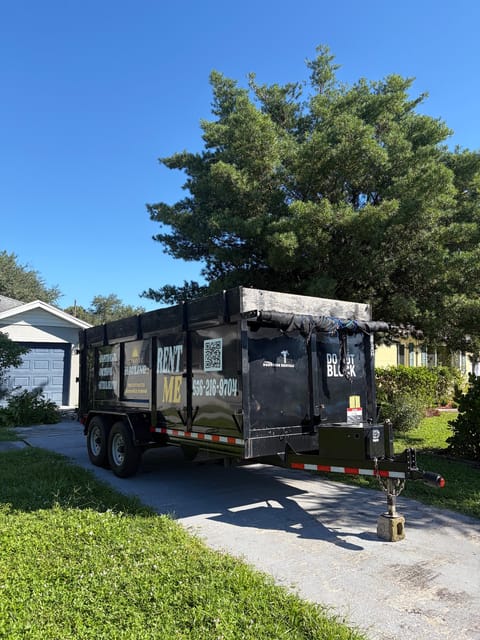
Choose by the biggest pile your project will make, then check the weight. Sunrise Hauling Co. rents dump trailers in three sizes across Hillsborough, Pinellas and Pasco counties. You can rent any size for one day or up to 14 days, and each comes with a set weight allowance:
- 10-yard, $150 for one day or $300 for 3 days: 1-ton allowance. One-car garage, closet and single-room cleanouts, or a bathroom tear-out. See the 10-yard trailer.
- 15-yard, $200 or $350: 1.5-ton allowance. Kitchen remodels, flooring jobs, moving purges and a yard full of brush. See the 15-yard trailer.
- 20-yard, $250 or $400: 2-ton allowance. Whole-house cleanouts, multi-room remodels and big, bulky jobs. See the 20-yard trailer.
Weight past the allowance is billed at $99 per ton, and a ton means 2,000 lb. Every day after the first adds $75, for any size.
How big is a cubic yard?
A cubic yard is 27 cubic feet: picture a box 3 feet long, 3 feet wide and 3 feet tall. A 10-yard trailer holds about ten of those boxes, loaded level with the top of its walls and no higher.
The easiest yardstick is a pickup truck. Hillsborough County tells residents that a loaded pickup bed holds about two cubic yards (as of October 2026, Hillsborough County (opens in a new tab)). By that measure:
- A 10-yard trailer holds roughly five pickup loads.
- A 15-yard trailer holds roughly seven or eight.
- A 20-yard trailer holds roughly ten.
If the pile already exists, measure its length, width and height in feet, multiply them and divide by 27. A pile 12 feet long, 6 feet wide and 4 feet high is 288 cubic feet, or about 10.7 cubic yards. That's a 15-yard job, not a 10. Round up for bulky things like couches, cabinets, branches and boxes, because they leave air pockets that no amount of stacking fills.
A local reference point: the City of Tampa asks residents to keep their once-a-year SWEEP curbside pile under 10 cubic yards, and SWEEP won't take building materials such as drywall, roofing, tile, fences or sheds (as of October 2026, City of Tampa (opens in a new tab)). If your project is bigger than that pile, or made of those materials, a trailer is the realistic option.
Project-by-project size guide
These are starting points for a typical single-family home. The size of your house, and how much you decide to keep, will move them up or down.
- Closet, spare room, attic or one-car garage cleanout: 10-yard
- Packed two-car garage, or a garage plus the attic: 15-yard
- Whole-house or estate cleanout: 20-yard, sometimes two rentals for a very full house
- Bathroom remodel: 10-yard
- Kitchen remodel: 15-yard, or 20-yard if you're opening walls too
- Multi-room renovation: 20-yard
- Carpet or vinyl tear-out in a few rooms: 10-yard
- Tile floor tear-out: 10-yard, planned by weight (ask us first)
- Deck or wood fence tear-out: 15-yard
- Roof tear-off: sized by weight, not space, so talk to us first
- Yard, brush and palm-frond cleanup: 15-yard, or 20-yard for a big lot
- Moving out or downsizing: 15-yard for most homes
- Concrete, brick, pavers or dirt: call us before you book
Cleanouts
Household junk is bulky but light, so a cleanout is a space question. Walk the rooms and count pickup loads. Furniture, mattresses and boxes fill a trailer long before they reach its weight allowance, so if you're torn between two sizes, take the bigger one. Running out of room halfway through the job is the sizing mistake to avoid.
Remodels
Remodel debris mixes light and heavy material. Cabinets, trim, drywall and packaging take up room, while tile, plaster and mortar add weight. A typical kitchen tear-out lands in a 15-yard. A bathroom is smaller but heavier than it looks once you count a tiled floor, a tiled shower and maybe a cast-iron tub.
Flooring
Carpet and pad are light for the room they take. Tile is the opposite: a few rooms of ceramic or porcelain, with thinset still stuck to the back, can reach a ton while the trailer still looks half empty. For tile, size by weight, not by how big the pile looks.
Roofing
Shingles are the classic case where weight decides. Measure your roof in squares (one square is 100 square feet of roof), then check the per-square shingle weights from manufacturer data sheets in our dumpster weight limits guide before you pick a size.
Yard debris
Branches, brush and palm fronds are light and springy, so they eat space. Cut long limbs down and lay them flat to fit more in. For context, Hillsborough County's weekly curbside yard-waste limit is 2 cubic yards, with limbs under 4 feet long and 6 inches across (as of October 2026, Hillsborough County (opens in a new tab)). Clearing an overgrown lot easily makes several times that. Wet grass, leaves and mulch are the exception: soaked, they get heavy.
Moving
Moving and downsizing loads are mostly furniture, boxes and garage overflow, and most households land in a 15-yard. If an item still works, set it aside for donation before the trailer arrives so it doesn't take up paid space.
When weight decides instead of space
Some materials weigh so much per cubic yard that the allowance runs out long before the trailer is full. Broken concrete runs about 2,850 lb per cubic yard and dry soil about 2,025 lb, according to the conversion factors published by Seattle Public Utilities (opens in a new tab). In other words, one cubic yard of either weighs about a ton.
Our trailers take heavy material, but every shovelful counts. Before you load concrete, brick, tile, dirt or roofing shingles, ask us, and we'll help you pick the size and plan the load around the $99-per-ton overage.
Between two sizes?
- Light and bulky project (furniture, brush, cabinets): go up a size.
- Heavy project (tile, concrete, shingles): stay with the smaller size and plan by weight.
- Load smart: break down furniture, flatten boxes and fill gaps with small items.
- Keep it level: load up to the top of the walls, never above them, so the trailer can travel safely.
- Tell us the materials before you book, so we can confirm the fit.
Where the trailer goes
Our trailers are driveway-friendly, and we set protective boards under the trailer's contact points to help prevent marks. Plan for a flat spot with clear room overhead, away from low branches and wires. If your driveway is narrow, sloped or gated, ask us for exact dimensions before you request. Our driveway prep guide covers HOAs, pavers and placement.
How to request your rental
Choose a size on our dumpster rentals page, pick your drop-off and pickup dates and book online; the trailer is held right away and you pay when we deliver. We text you afterward to confirm the delivery window, which is also a good moment to double-check the size. Still unsure? Text a few photos of the space or the pile to (656) 216-9704 and we'll tell you which trailer fits.
Sources
- Hillsborough County — Hillsborough Heights Solid Waste Facility (pickup bed ≈ 2 cubic yards) (opens in a new tab)
- City of Tampa — S.W.E.E.P. bulk pickup (opens in a new tab)
- Hillsborough County — Discarding yard and wood waste (opens in a new tab)
- Seattle Public Utilities — Volume and weight conversion factors (Dec 2022) (opens in a new tab)