Quick answer
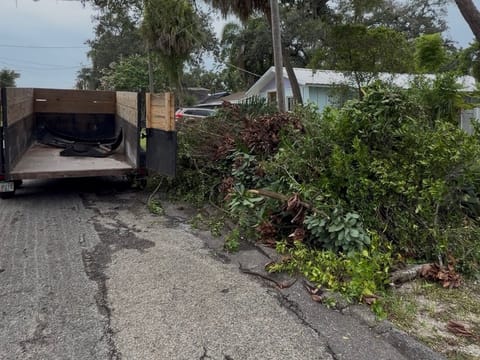
Tampa Bay counties and cities collect storm debris from the curb in scheduled passes, but only when it's sorted. Separate vegetative debris, construction debris, appliances, electronics and household hazardous waste, and keep piles out of the road and away from drains and hydrants. After the 2024 storms, crews skipped bagged and mixed debris. As of October 2026, follow your county's current storm instructions first.
Short answer: in Tampa Bay, storm debris is collected from the curb by your county or city, in scheduled passes, and only when it's sorted. After Hurricanes Helene and Milton in 2024, crews left bagged debris, mixed piles and household hazardous waste behind, and the last passes ran into early 2025. This guide explains how those programs worked, as of October 2026. Programs change from storm to storm, so always follow your county's or city's current storm instructions first.
Who picks up storm debris at your address?
Your program depends on where your address sits, not on the city printed in your mailing address. Here's how it worked in 2024:
- Hillsborough County ran curbside storm collection across nearly 900 miles of roads in the unincorporated county (Hillsborough County (opens in a new tab)).
- Pinellas County collected only in unincorporated areas, and each city managed its own debris program (Pinellas County (opens in a new tab)).
- Pasco County set a final curbside deadline for storm debris and offered free resident drop-off for a few weeks afterward (Pasco County release (opens in a new tab)).
Not sure whether you're inside a city or in an unincorporated area? Our bulk pickup guide walks through it city by city.
How should you sort storm debris?
Sort storm debris into separate piles by type, because collection trucks are assigned by category. FEMA lists six curbside categories (FEMA (opens in a new tab)):
- Vegetative debris: tree branches, leaves and plants.
- Construction debris: drywall, lumber, carpet and furniture.
- Large appliances (white goods): refrigerators, washers, dryers, stoves and dishwashers. Secure the doors so they can't open.
- Electronics: televisions, computers and phones.
- Household hazardous waste: oil, batteries, pesticides, paint and cleaning supplies.
- Household garbage: food, paper and packaging, which goes out with your regular trash.
The local counties used similar piles in 2024. Hillsborough asked residents to separate yard waste, damaged household appliances, and construction and demolition debris such as furniture, drywall, carpet and fencing (Hillsborough County (opens in a new tab)). Pinellas asked for white goods, demolition debris, and large tree limbs or fence pieces cut to 4-foot lengths (Pinellas County (opens in a new tab)).
Where do the piles go?
Put storm debris at the edge of your property, next to the road but never in it. The placement rules from 2024:
- Don't block the roadway, mailboxes or storm drains (Hillsborough).
- Keep piles next to the road, not in the road or gutter, and not near storm drains (Pinellas).
- Keep debris away from trees, poles and structures, including fire hydrants and meters (FEMA).
- Leaves and small twigs go in containers or bags for your regular weekly yard waste pickup, not in the storm pile (Hillsborough).
What did curbside storm crews leave behind?
In 2024, curbside crews skipped several kinds of debris:
- Bagged debris. Hillsborough said bagged waste would not be collected from the right-of-way, and Pinellas said the same about bagged debris.
- Unsorted piles. Pinellas warned that debris "not separated will not be collected."
- Small piles of vegetation in Pinellas, which belonged in regular yard waste.
- Household hazardous waste, such as paint and car batteries, in Hillsborough.
- Business debris. Pinellas said businesses had to remove their own storm debris, possibly through a private contractor. From October 16, Hillsborough's storm drop-off sites served residential customers only, and businesses paid normal fees again.
- Non-storm yard waste. Pasco said it was not picking up fresh, green yard waste that wasn't storm-related; your private trash hauler handles that.
How long did storm debris collection take?
Curbside storm collection took months, not days. On February 3, 2025, Hillsborough County reported that haulers had removed over 4.8 million cubic yards, an estimated 99% of the storm debris, and had completed the final pass. After that, vegetative debris went out with regular yard waste (containerized, neatly stacked or bundled), and construction and demolition debris had to go to one of the County's five Community Collection Centers. In Pinellas, the final pass in unincorporated areas finished in mid-January 2025. Pasco set December 15, 2024 as the last day to put storm debris at the curb, with free resident drop-off at the East Pasco Transfer Station and West Pasco Resource Recovery through December 28, 2024.
Private roads, HOAs and gated communities
Debris on private roads can need extra paperwork before county crews may collect it. In 2024, Pinellas County contacted HOAs, private-road neighborhoods and gated communities for permission, and an authorized representative had to provide a Right of Entry; all documents were due December 13, 2024 (Pinellas County (opens in a new tab)). If you live in an HOA, ask your manager right after a storm whether that paperwork is underway.
When is a dump trailer or a hauler the faster option?
A dump trailer or a hauler is faster when you can't wait for the next curbside pass, or when your debris doesn't fit the program. Common cases:
- Roofers, contractors or an insurance adjuster need the driveway or yard clear now.
- Your debris is bagged, mixed or in small piles that crews skip.
- The property is a business, and you're responsible for your own debris.
- You're pulling out wet drywall, flooring and soaked carpet and need somewhere to put it as you go.
- You're on a private road and the paperwork isn't settled.
We can help two ways. With yard and storm debris removal, our crew loads the limbs, brush and broken fencing, and you get an up-front price before anything is loaded. With a dump trailer rental, we deliver a 10, 15 or 20-yard trailer to your driveway for the days you book, one to 14 days, and you fill it at your own pace. The sizes include 1, 1.5 and 2 tons, with $99 per ton over that. Wet drywall, carpet and green wood are heavy, so leave room in your weight allowance.
You can book a trailer online with 24 hours' notice and pay when we deliver. After a big storm, calendars fill quickly, and same-day or next-day work happens only when the schedule allows. We can't take household hazardous waste, paint and solvents, propane tanks or the other prohibited items.
How to hire help without creating a legal problem
Make sure whoever hauls your debris takes it to a legal disposal site. Under Florida law, dumping more than 500 pounds or 100 cubic feet of litter, any amount for a commercial purpose, or any hazardous waste is a third-degree felony (Florida Statutes 403.413 (opens in a new tab)). After Milton, Hillsborough County also gave residents who hired a landscaper or hauler a waiver showing the debris came from their residential property, which the crew presented at collection sites (Hillsborough County (opens in a new tab)). Ask any crew where your debris will go, and get the price before the work starts.
Safety first when you clean up
Before you move anything, photograph or video the damage and file your insurance claim; FEMA also suggests keeping receipts for repairs. Then:
- Watch for cables or wires in the debris, and leave them for professionals (FEMA).
- Pull out wet contents right away. Pinellas warns that mold can develop within 24 to 48 hours, and that floodwater mud may contain sewage and chemicals.
- Wear gloves, sturdy boots and eye protection, and leave trees on roofs or near power lines to tree and utility crews.
A checklist before the next season
The Atlantic hurricane season runs from June 1 to November 30, and its peak is around September 10 (National Hurricane Center (opens in a new tab)). Before the next one:
- Find out whether a city or the county serves your address, and bookmark its storm-debris page.
- Photograph your house, yard, fence and roof now, so you have "before" pictures.
- Ask your HOA about dump-trailer placement and private-road debris rules.
- Save our number, (656) 216-9704, for the limbs and debris the curb won't take.
Sources
- FEMA — Navigating your recovery: debris removal (opens in a new tab)
- Hillsborough County — How to dispose of Hurricane Milton debris (Oct. 17, 2024) (opens in a new tab)
- Hillsborough County — Storm debris collection completed (Feb. 3, 2025) (opens in a new tab)
- Pinellas County — What to know about Hurricane Helene debris pickup (opens in a new tab)
- Pinellas County — Storm debris (Right of Entry, final pass) (opens in a new tab)
- Pasco County release — Storm debris pickup deadline Dec. 15, 2024 (opens in a new tab)
- Florida Statutes 403.413 — Florida Litter Law (illegal dumping) (opens in a new tab)
- National Hurricane Center — Tropical cyclone climatology (opens in a new tab)